Bennett Place: A Visit to the Site of the 1865 Surrender
A personal visit to the monument, reconstructed farmhouse and exhibits at Bennett Place.
Photographs supplied by Vincent J. Esposito
Confederate General Joseph E. Johnston and U.S. General William T. Sherman met at the Bennett family home in April 1865 to negotiate surrender. The farmhouse seen on a visit today is a reconstruction.
The photographs record the site as visited, including the monument and its inscription. Historical illustrations and commemorative wording are identified separately from surviving buildings and eyewitness evidence.
Read the historical background
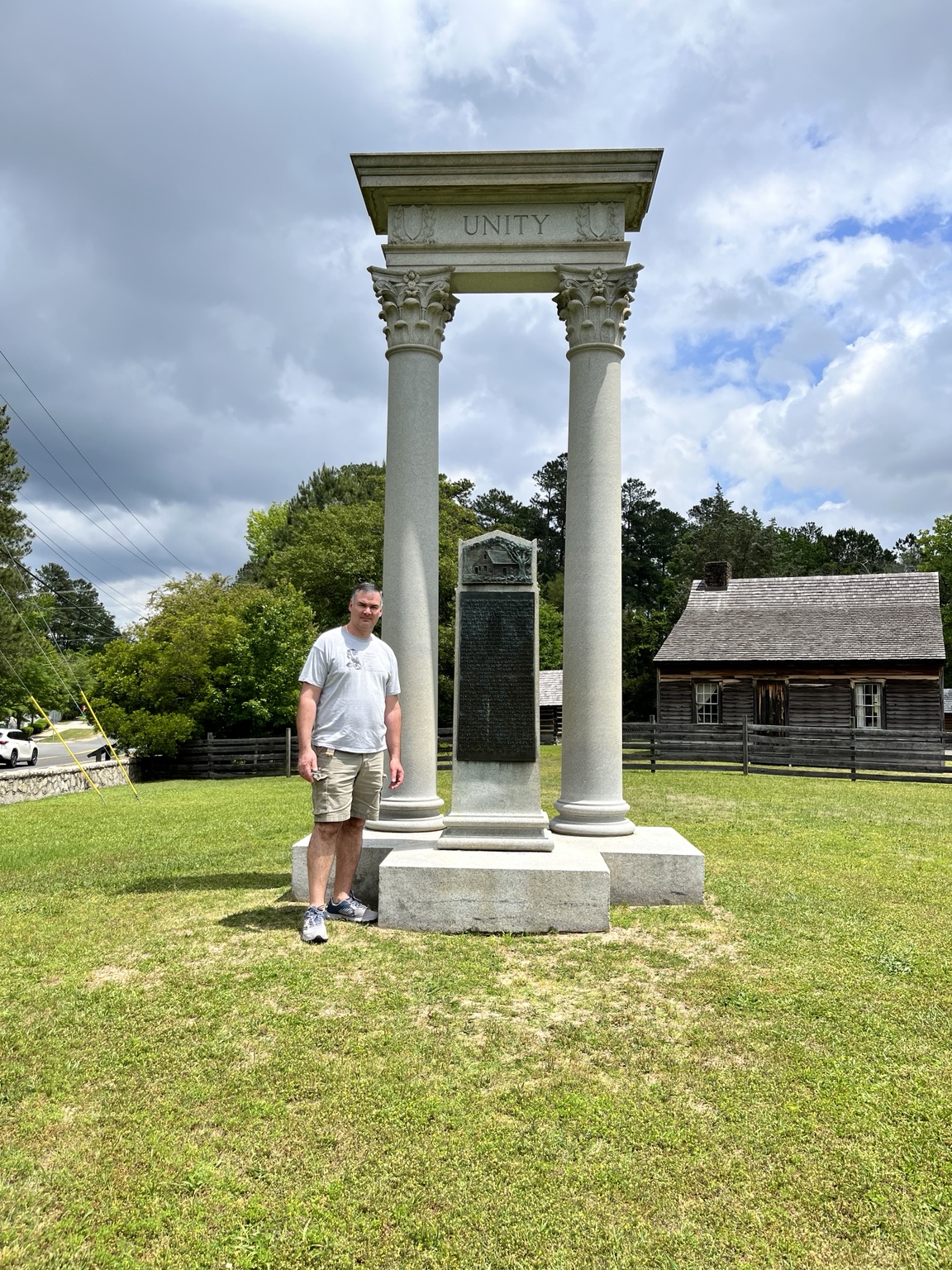
The Unity Monument: remembering the surrender decades later
The monument at Bennett Place commemorates the negotiations between Union General William T. Sherman and Confederate General Joseph E. Johnston in April 1865. The resulting surrender covered the largest number of troops of any surrender in the Civil War. It was a major step in ending organized Confederate resistance.
The Unity Monument was dedicated in 1923, decades after the surrender. Its theme of reunion reflects a later generation’s commemorative choices. Understanding both dates is essential: 1865 explains the military event, while 1923 explains the memorial. The language of unity should also be considered alongside the unfinished struggle for freedom and equal citizenship after emancipation.
Historical sources: Read the source · Additional source
Read the historical background
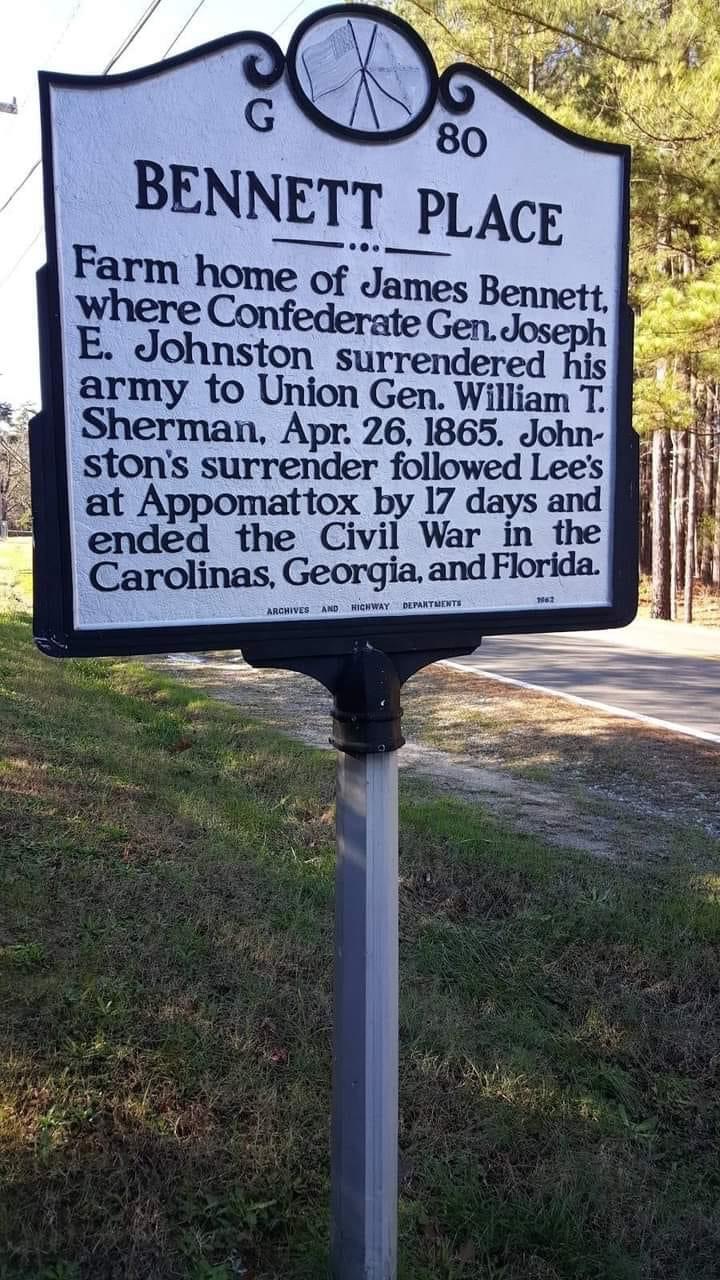
Bennett Place’s roadside marker
The roadside marker introduces an ordinary farm that became a place of national consequence. Sherman and Johnston met at the Bennett family home in April 1865 to negotiate a surrender. The location reminds visitors that decisive political and military meetings can occur in domestic spaces rather than official government buildings.
A roadside sign necessarily compresses events. The negotiations involved more than a single meeting, and the final military terms followed an earlier agreement that Washington rejected. The marker is a starting point for that sequence, while the historic site’s interpretation explains how the settlement developed and why its reach extended far beyond the farm.
Historical sources: Read the source
Read the historical background
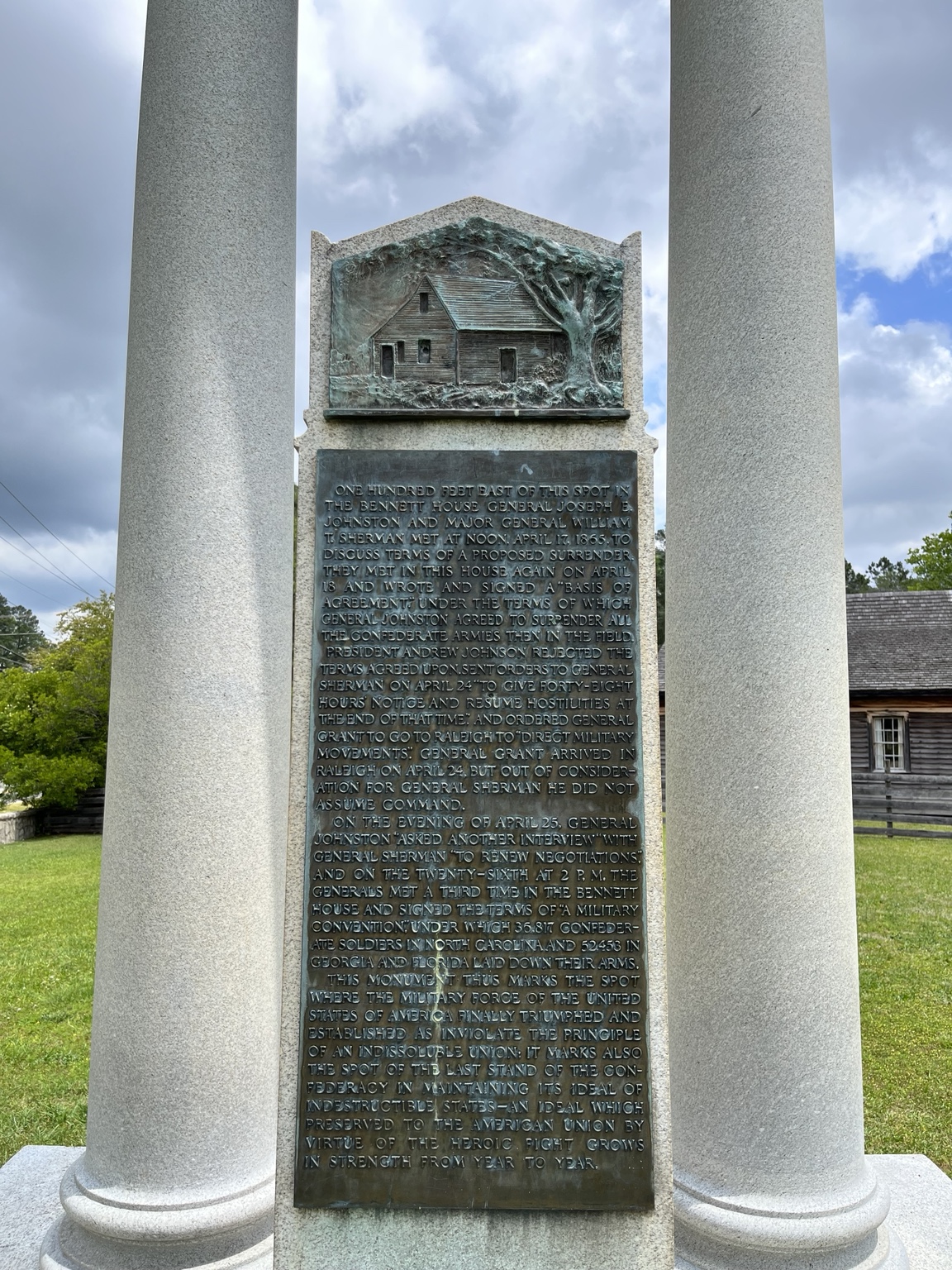
Reading the Unity Monument’s inscription
The inscription explains how the surrender was remembered when the memorial was created. Its emphasis on reunion belongs to the monument’s twentieth-century context, while the event being commemorated occurred in April 1865. Separating those moments helps visitors avoid treating a later memorial as if it were a document written during the negotiations.
Monuments preserve selected meanings. Here, the theme of national unity can be considered alongside the war’s consequences for formerly enslaved people and the contested development of citizenship after the fighting ended. The inscription is valuable evidence of public memory, and the site’s broader history supplies the military and social context around it.
Historical sources: Read the source · Additional source
Read the historical background
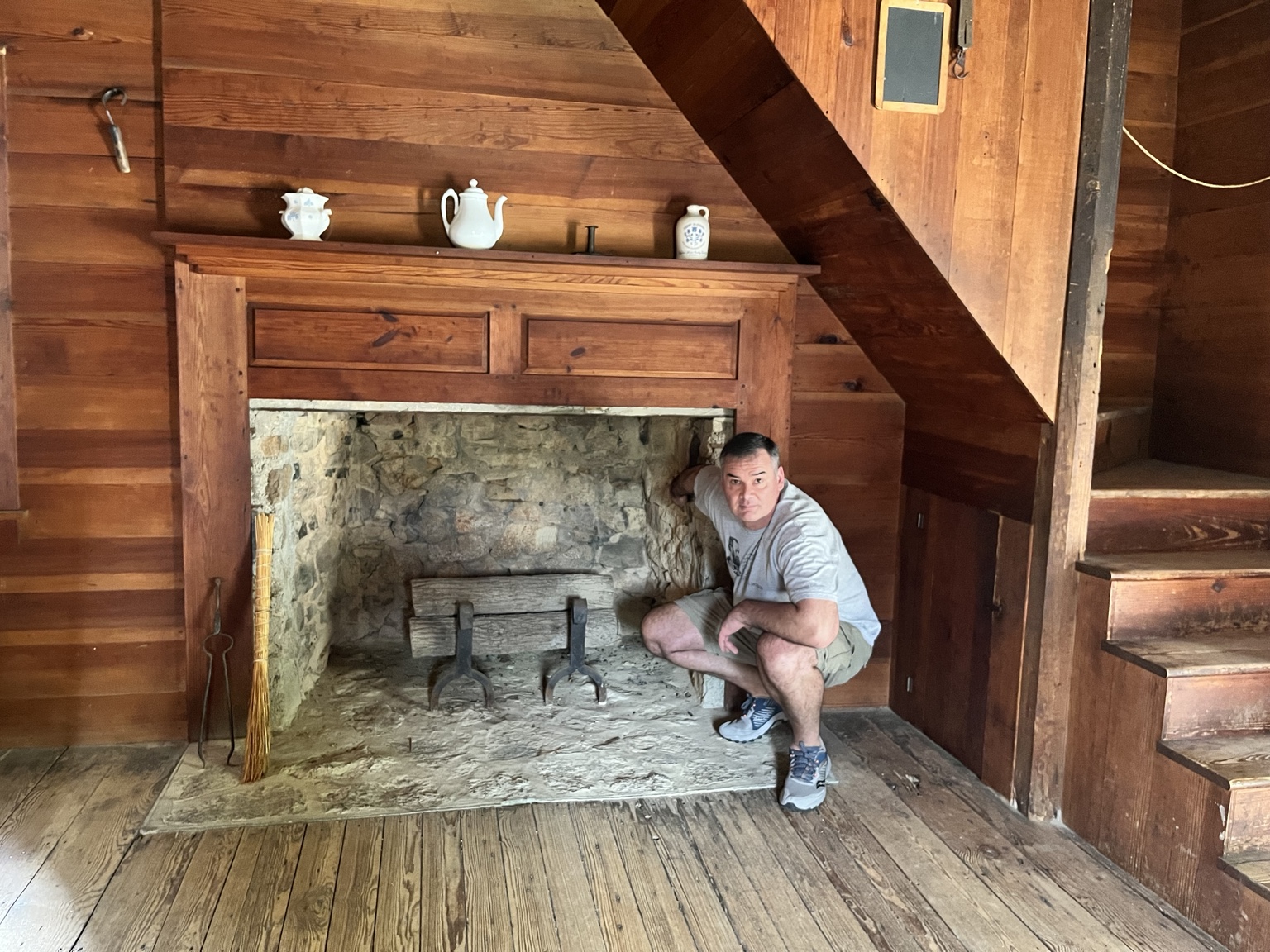
The farmhouse fireplace: domestic life and reconstruction
The fireplace places the visitor inside an interpretation of the Bennett family’s rural home. Before it became associated with surrender negotiations, this was a household and working farm. A hearth helps visitors imagine the cooking, warmth and daily labor that shaped domestic life around the meeting place.
The present farmhouse is a reconstruction. The historic site records that fire destroyed the farmhouse and kitchen in 1921, leaving the stone chimney. That distinction matters: the room helps explain the setting, but its present walls and furnishings should not all be described as surviving unchanged from 1865. Reconstruction is a preservation tool that requires clear explanation.
Historical sources: Read the source
Read the historical background
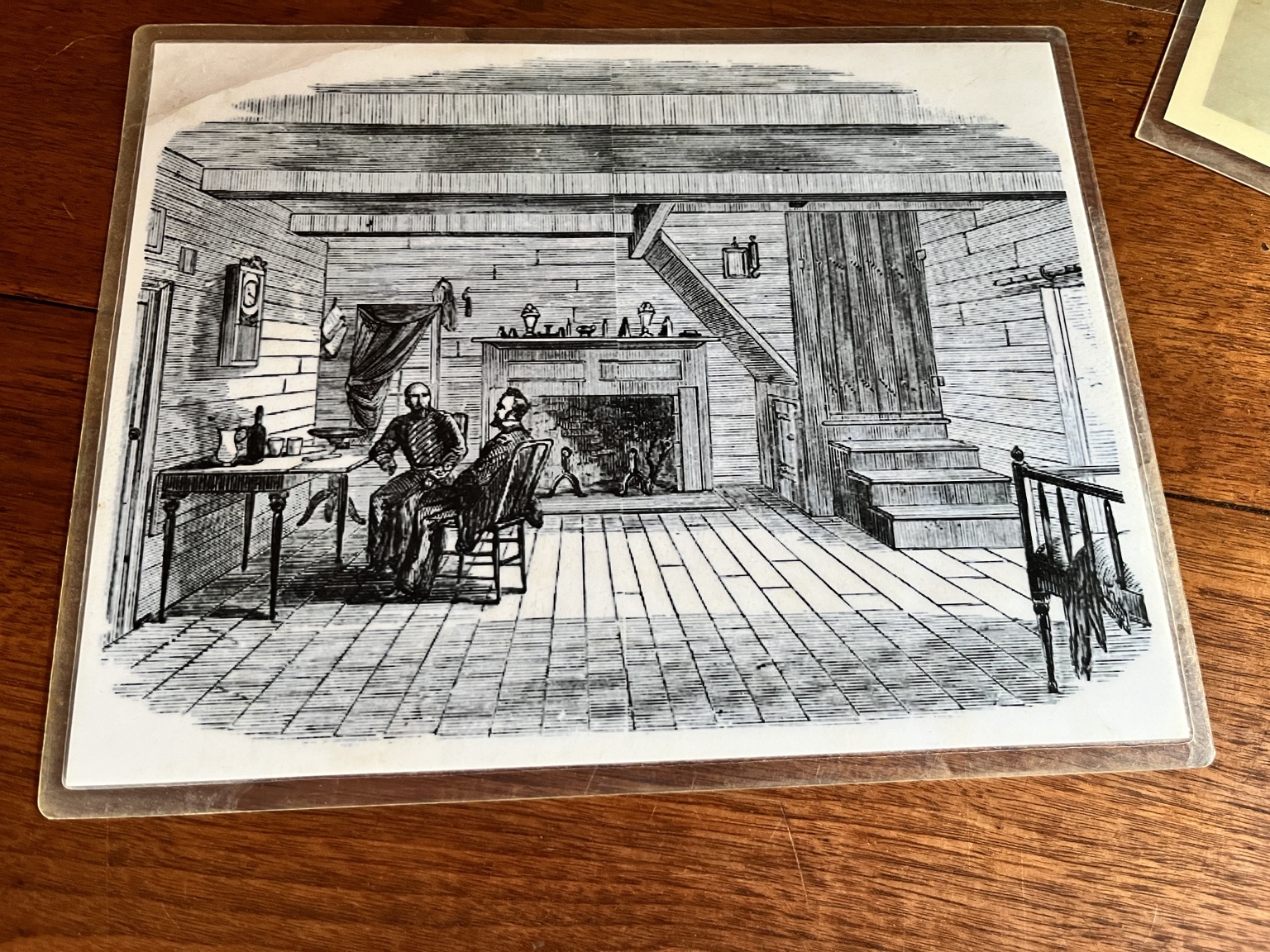
An illustration of the surrender: interpretation rather than a camera record
The photographed illustration helps visitors visualize the Bennett Place negotiations. It belongs to the interpretation of the event, rather than serving as a photograph taken during the 1865 meeting. The distinction matters because an artist selects the figures, arrangement and atmosphere used to tell the story.
The verified historical framework is the series of meetings between Sherman and Johnston and the final surrender agreement of April 26, 1865. Use the illustration to consider how a quiet domestic setting became the scene of a major military settlement, while relying on documentary history for the precise terms and sequence of negotiations.
Historical sources: Read the source