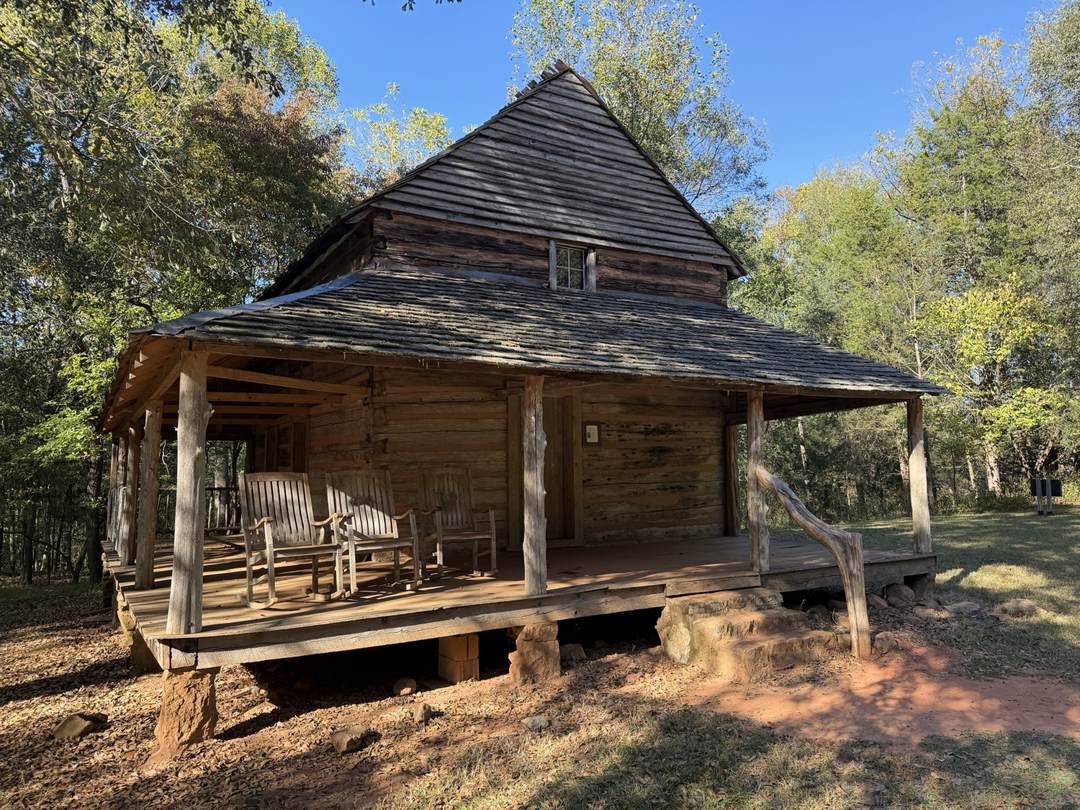
Graham Cabin and a famous family connection
A Greenway exhibit identifies Graham Cabin as the ancestral home of evangelist Billy Graham’s grandfather, William Crook Graham. The interpretive display dates the structure to around 1780, notes its long history of alterations, and records its relocation to the Greenway in 1999.
The family history includes William Crook Graham’s service as a Confederate soldier. The historical interest of the home is wider than any one individual: weathered timber, porch construction, and changes made over time reveal how domestic buildings were adapted to new generations.
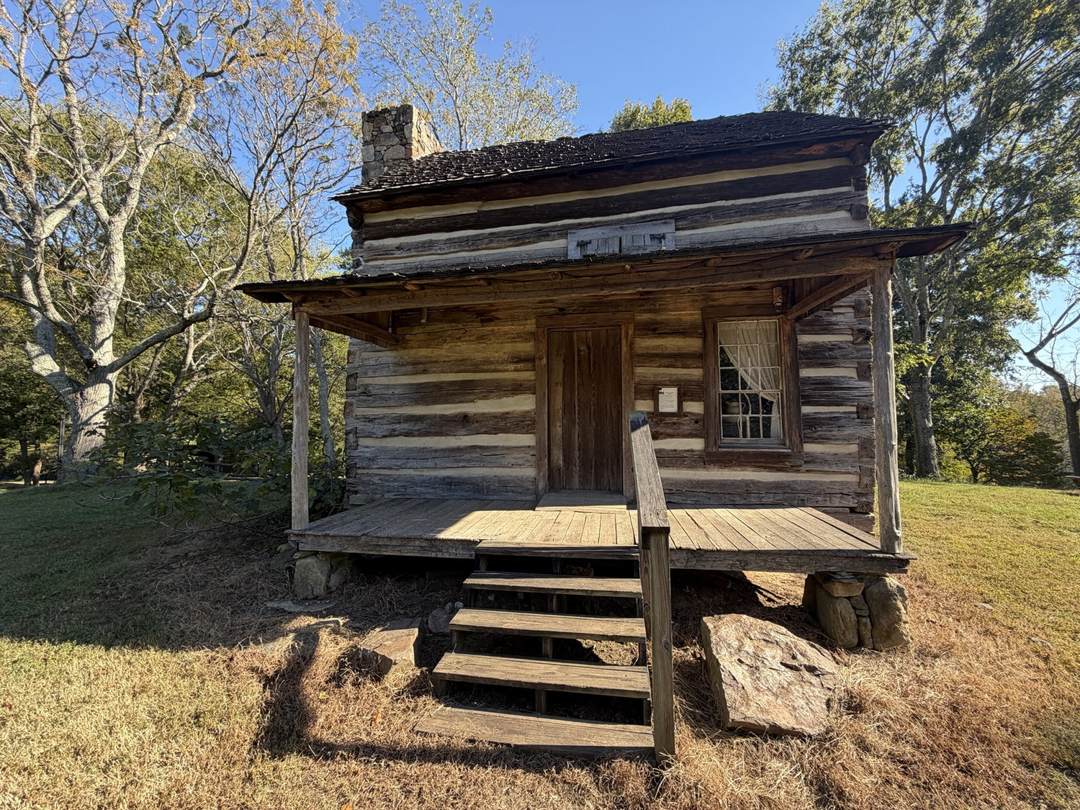
The Faires–Coltharp Cabin
Another cabin, built around 1814 by Jesse Faires according to its exhibit, stood several miles from today’s location. The exhibit traces the family’s arrival by the Great Wagon Road and recounts the Civil War-era story of Jesse’s son John, who died in Virginia.
After the war, John’s widow Esther Jane married neighbor Josiah Coltharp. The restored house was relocated to the Greenway in 1994. Its visible stone chimney and log walls distinguish it from the Graham Cabin.
A preservation detail that matters
Both buildings are historic, but neither occupies its original homesite. It is important to say so when labeling photographs or plotting locations on a map. Their present-day settings preserve the buildings and allow visitors to see them; the locations themselves do not reproduce every aspect of the past.
Seeing both stories together
Standing in front of the two structures makes the differences in scale, layout, and construction easy to notice. These images also illustrate why interpretive panels belong in a photographic collection: they document exactly what visitors are being told about the structures, and help keep captions grounded in evidence.
From the field
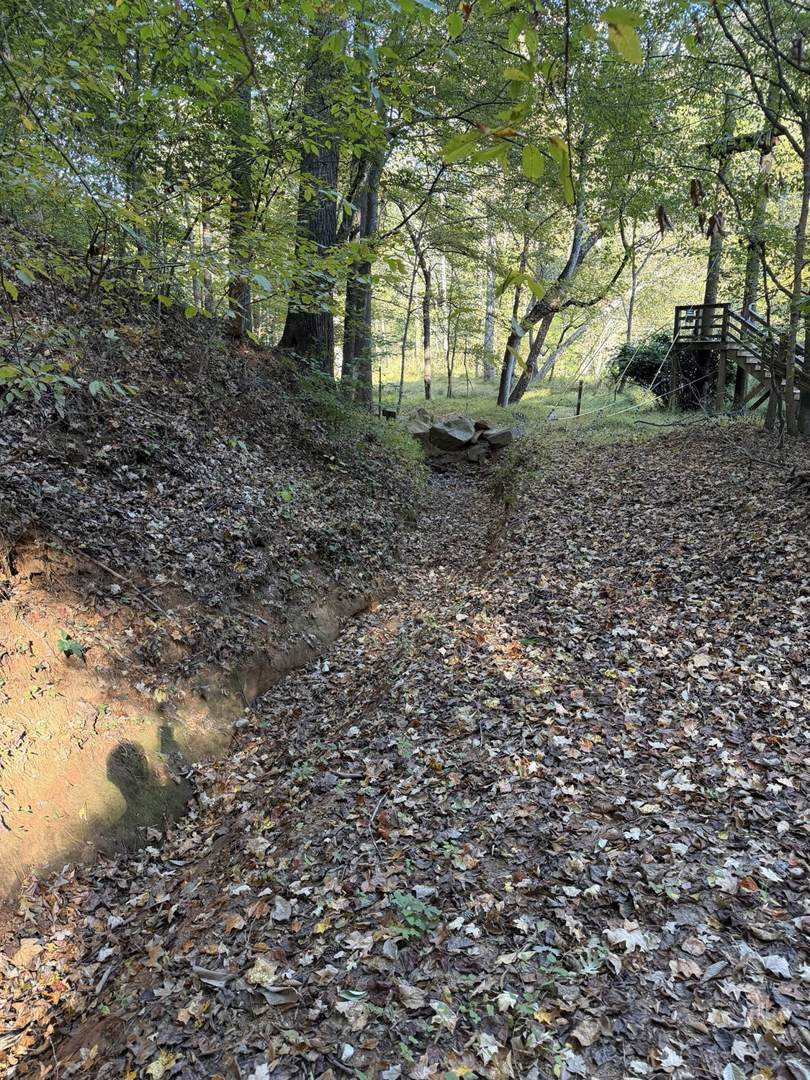
Photographs show the locations as visited; old buildings and historic markers should not be confused with reconstructions of the entire historical setting.
← Back to the stories