Before there was a town
Fort Mill stands on the ancestral lands of the Catawba Nation. The Nation describes thousands of years of life along the Catawba River, with villages, farming, trade, and strong community ties long before European settlement. Its history did not end when the town was founded; the Catawba Nation is a living community today.
By the eighteenth century, settlement and trade brought newcomers into the Catawba homeland. Agreements over land, colonial power, disease, and competing claims reshaped the region. Understanding the town’s origins means recognizing both the Catawba experience and the later settlement.
The fort: a complicated piece of the name
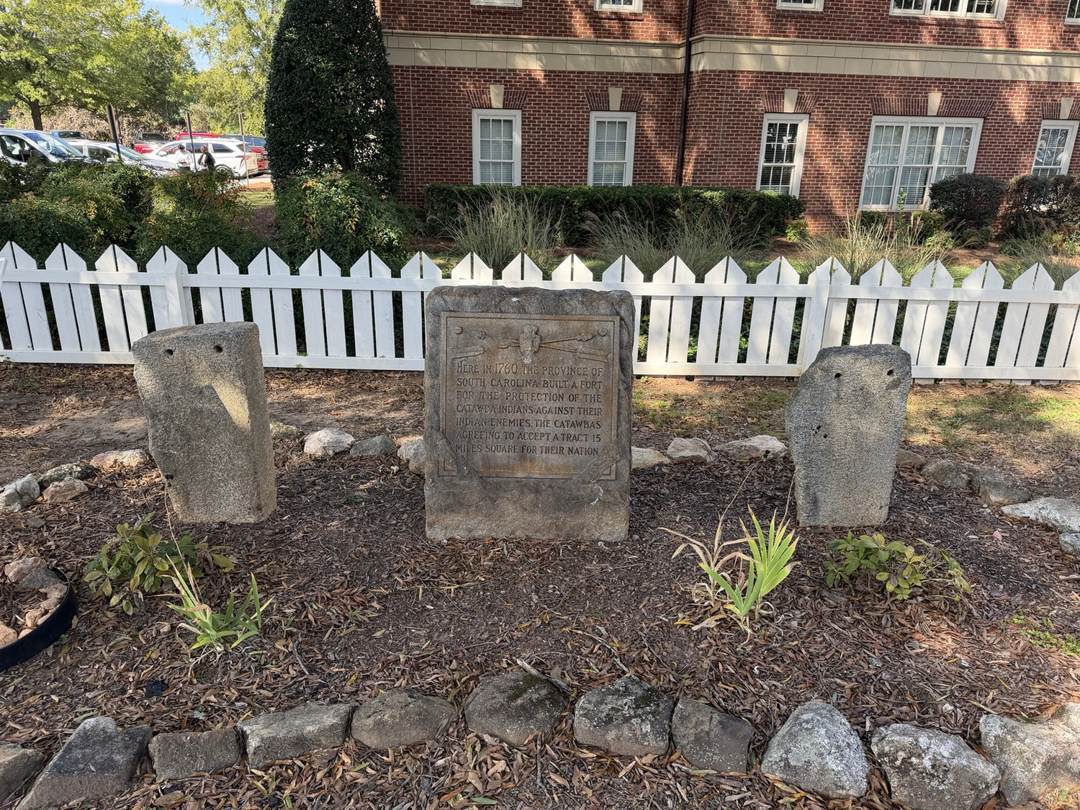
The Town of Fort Mill’s short official history describes a colonial-era British fort. But the Fort Mill History Museum’s research and interpretive material explain that a fort planned in 1760 for the protection of the Catawba people was never completed. The proposed work still became part of local memory and the town’s eventual name.
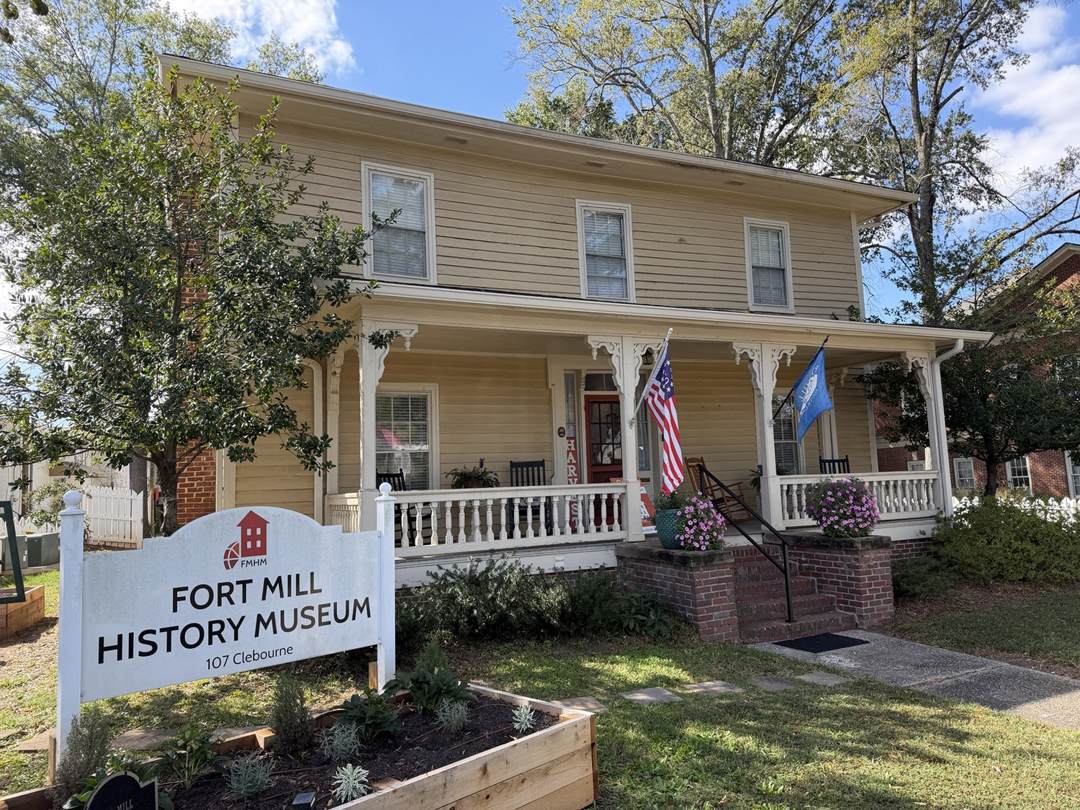
Three historic stone markers were moved from the Brickyard Road area to the museum grounds in 2021 for preservation. The stones are commemorative markers: they should not be mistaken for surviving walls of a finished fort.
The mill: a more tangible connection
The “Mill” portion refers to Webb’s grist mill, which operated on nearby Steele Creek. Mills mattered to families because grain had to be ground into flour and meal; their location drew business and provided reference points for surrounding settlements.
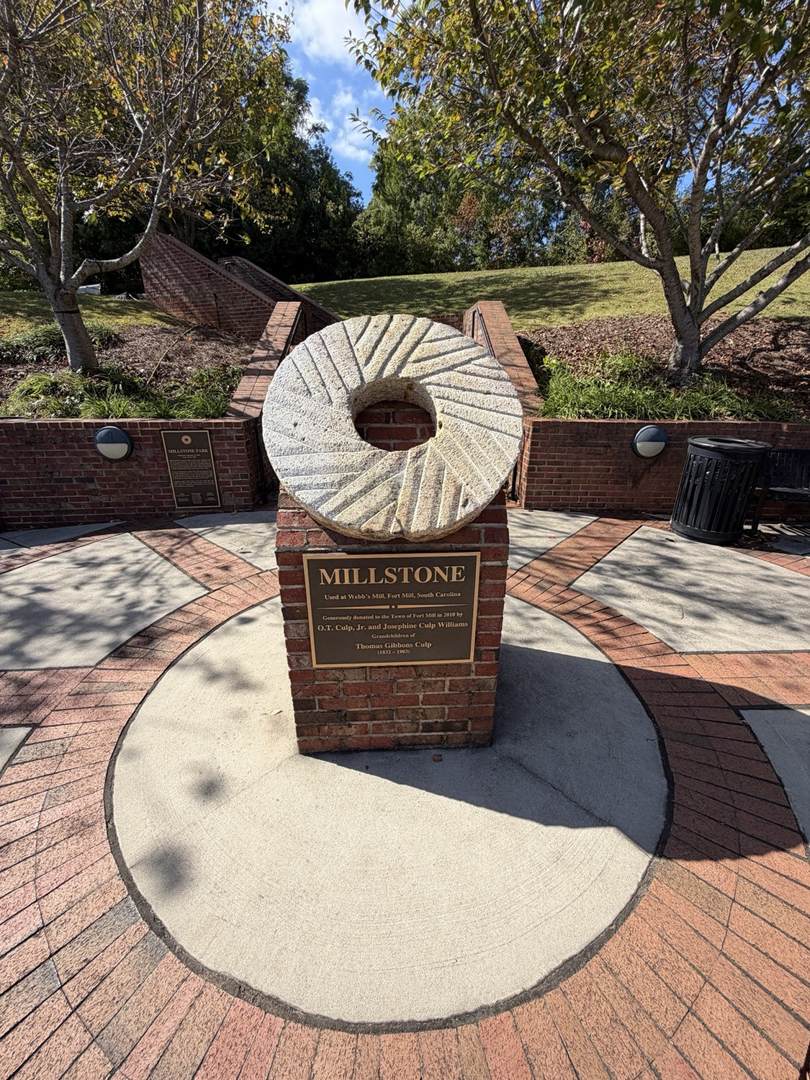
A historic millstone from Webb’s Mill is now displayed at Millstone Park in downtown Fort Mill. Its presence helps connect the modern visitor with the practical work that gave the town half of its name.
From settlement to municipality
The town incorporated in 1873, and its commercial center developed alongside the railroad and the textile economy. Today, older markers, surviving buildings, and the town’s museum preserve different parts of that history.
Fort Mill’s name represents the layers of its past. Some parts are well documented; others survive through markers, accounts, and local tradition. Keeping those distinctions visible makes the history more interesting, not less.
From the field
Photographs show the locations as visited; old buildings and historic markers should not be confused with reconstructions of the entire historical setting.
← Back to the stories