New York, through the lens
Landmarks, memorials and the details that invite a closer look.
Photographs supplied by Vincent J. Esposito
Read the historical background
Federal Hall: where the new government began
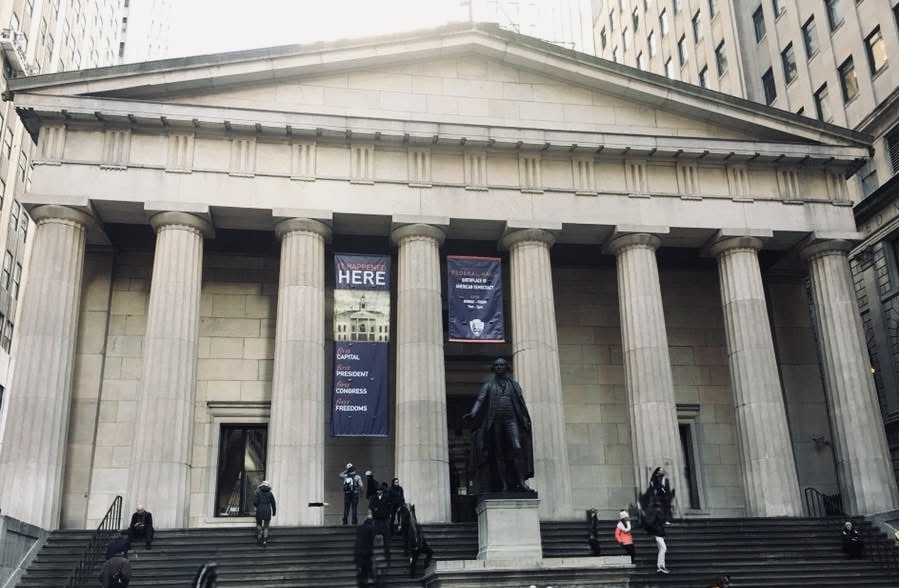
This Lower Manhattan site connects the photograph to the first federal government under the United States Constitution. George Washington took his presidential oath here on April 30, 1789, while Congress met in the building then known as Federal Hall. The early Congress began putting the Constitution into practice and proposed the amendments that became the Bill of Rights.
The classical building in the photograph is a later structure, completed in 1842 as a customs house. It is not the building on whose balcony Washington stood. Looking at the statue and columned facade together reveals how a later generation used architecture and public sculpture to preserve the memory of the founding government.
Historical sources: Read the source · Additional source
Read the historical background
Alexander Hamilton: a grave beside the financial district
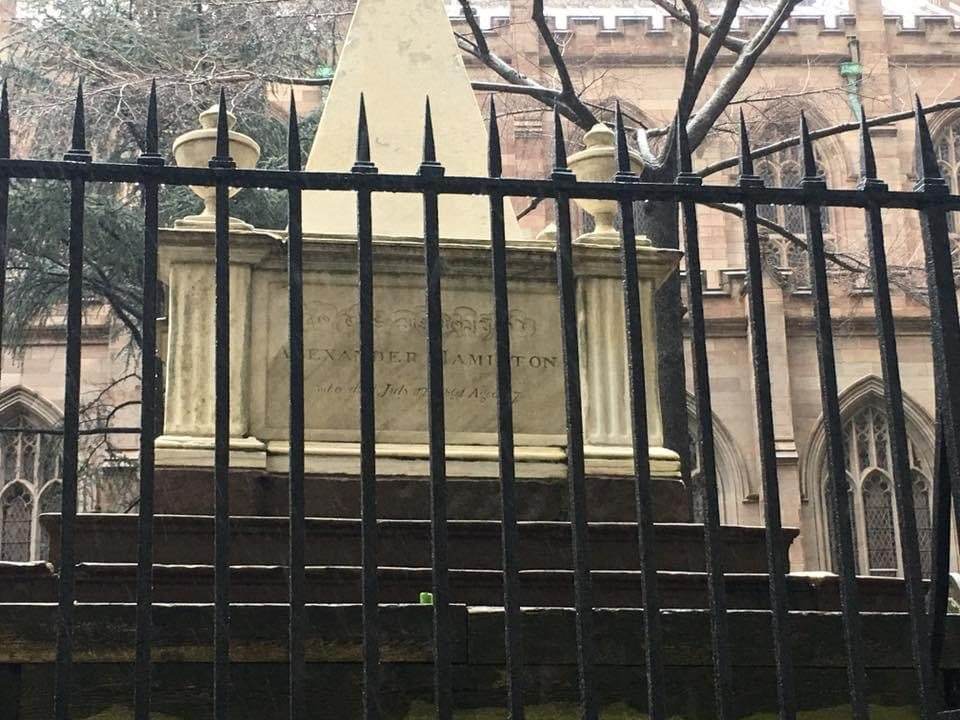
Hamilton’s memorial in Trinity Churchyard links a quiet burial ground to the political and financial institutions that developed around it. As the first secretary of the Treasury, he helped establish the new republic’s financial system. His public career also included service in the Revolution and advocacy for the Constitution.
Hamilton died in 1804 following his duel with Aaron Burr. Trinity commissioned the marble monument in 1804 and erected it in 1806. The memorial is therefore evidence of remembrance as well as a marker of burial: its form and inscription show how contemporaries wished his national service to be understood.
Historical sources: Read the source · Additional source
Read the historical background
One World Trade Center: rebuilding Lower Manhattan
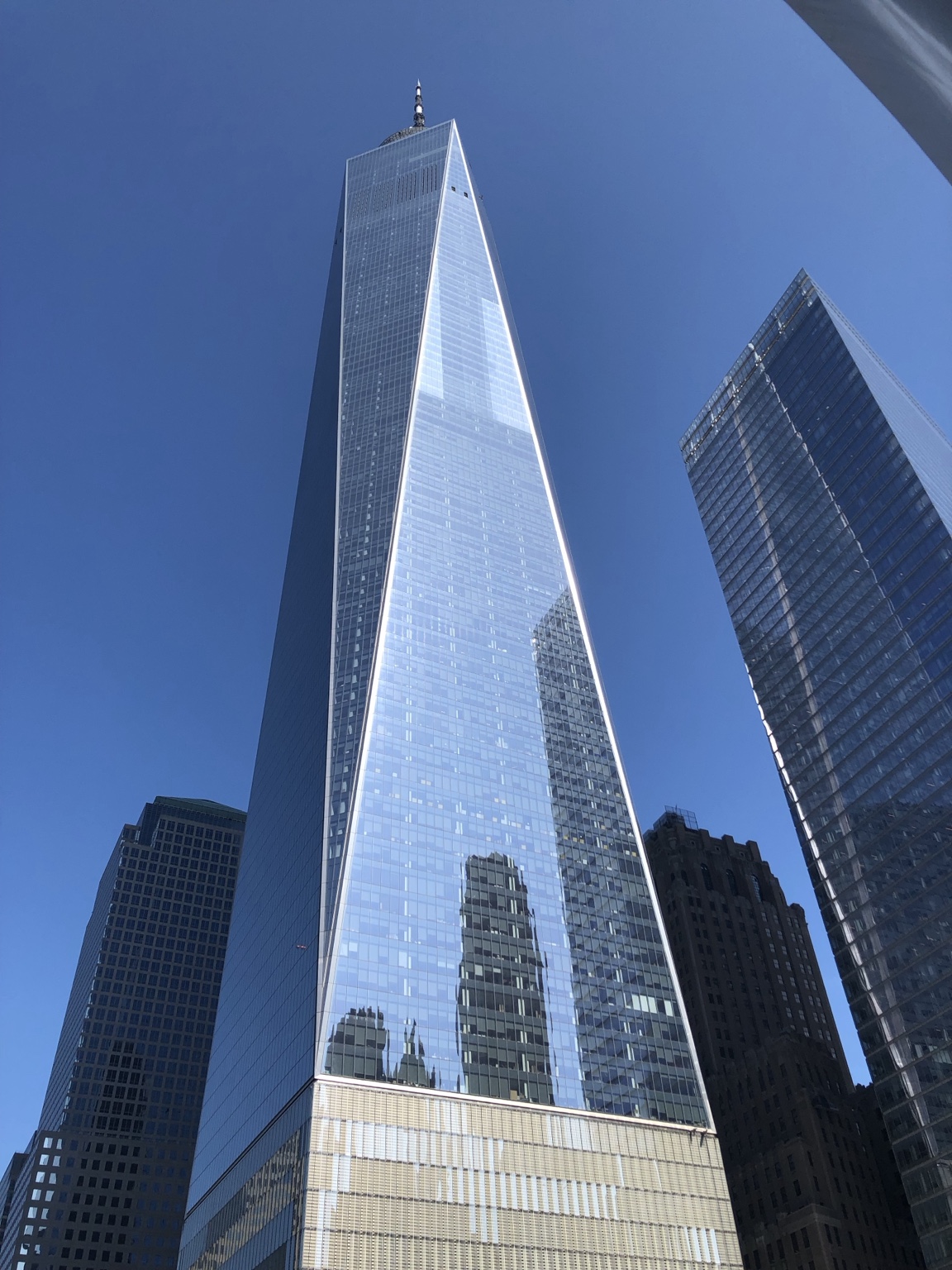
The upward view emphasizes the scale of One World Trade Center, the office tower that became a central part of the rebuilt World Trade Center district after the September 11, 2001 attacks. It opened in 2014. Its presence belongs to a larger story of recovery, construction, transportation and the return of daily working life to the site.
The tower and the September 11 Memorial serve different purposes within the same district. The building houses commercial activity, while the memorial preserves places for remembering those killed. Reading the skyline alongside the memorial landscape helps explain how a city can rebuild while retaining a visible obligation to remember.
Historical sources: Read the source · Additional source
Read the historical background
Jacob Leisler: colonial authority and civic remembrance
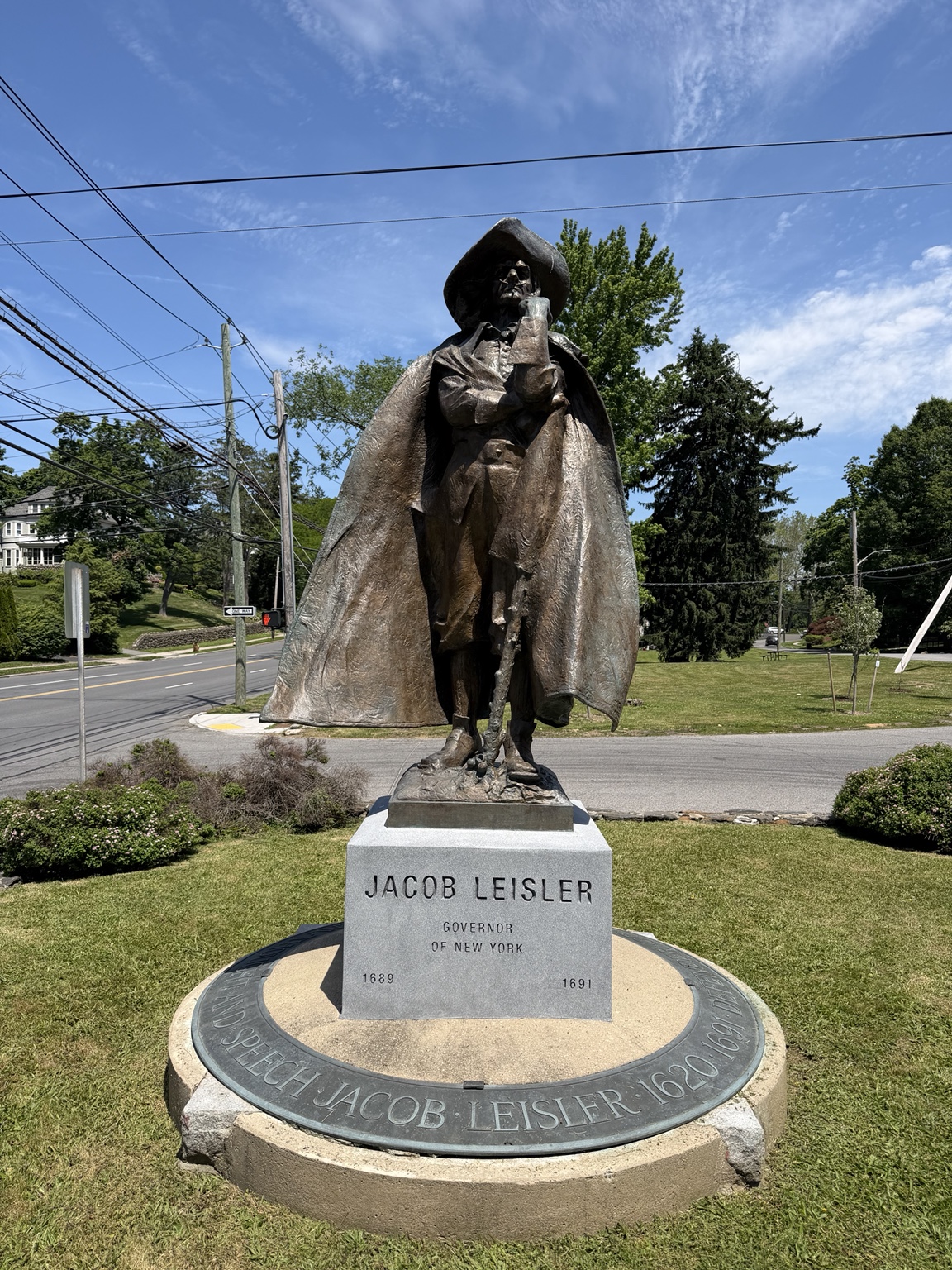
The pedestal identifies Jacob Leisler as governor of New York from 1689 to 1691. This places his story in the colonial period, almost a century before the American Revolution. The statue’s hat, cloak and pose present an interpretation of a seventeenth-century public figure rather than a contemporary portrait photograph.
The memorial also belongs to New Rochelle’s history of commemorating its early community. Notice the name repeated in the circular base and the dates on the pedestal: these are the monument’s own claims about its subject. They should be read alongside local historical interpretation, rather than treated as a complete account of the political conflict surrounding Leisler’s government.
Historical sources: Read the source
Read the historical background
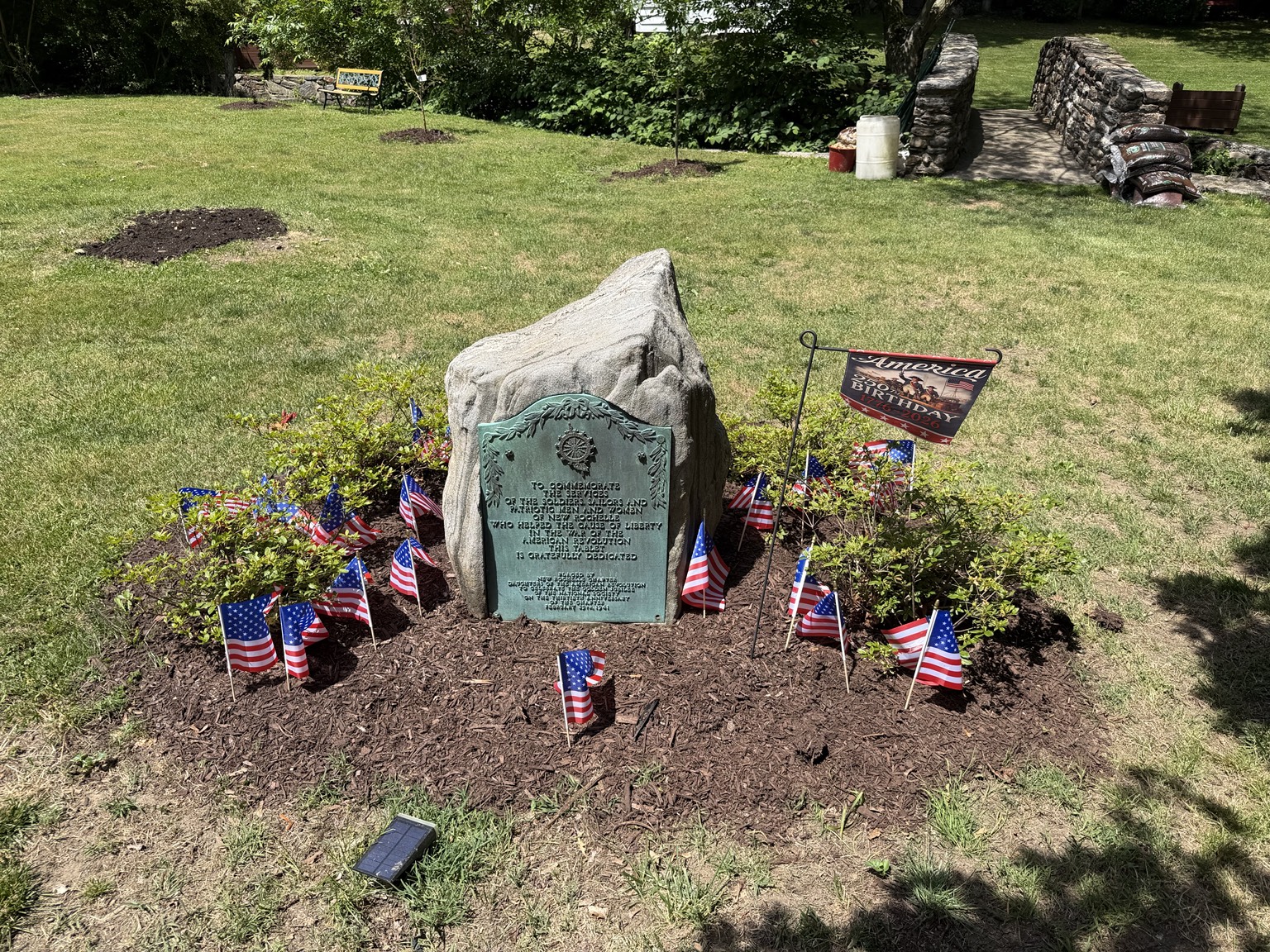
New Rochelle’s Revolutionary soldiers and patriots
This plaque commemorates the soldiers, sailors and other patriots of New Rochelle who supported the American Revolution. Its wording recognizes that independence depended on more than battlefield commanders: communities supplied military service, practical assistance and political commitment.
The bronze tablet, surrounding flags and landscaped stone form a commemorative setting created after the events. The photograph does not identify an individual grave or establish that a battle occurred at this exact spot. Its historical value lies in the community’s act of remembrance and in the questions it invites about the local people whose service lies behind a collective dedication.
Historical sources: Read the source