Inside St. Louis Cathedral
An exterior view, the central aisle, painted ceiling and an on-site historical plaque.
Photographs supplied by Vincent J. Esposito
Read the historical background
St. Louis Cathedral and the history of New Orleans
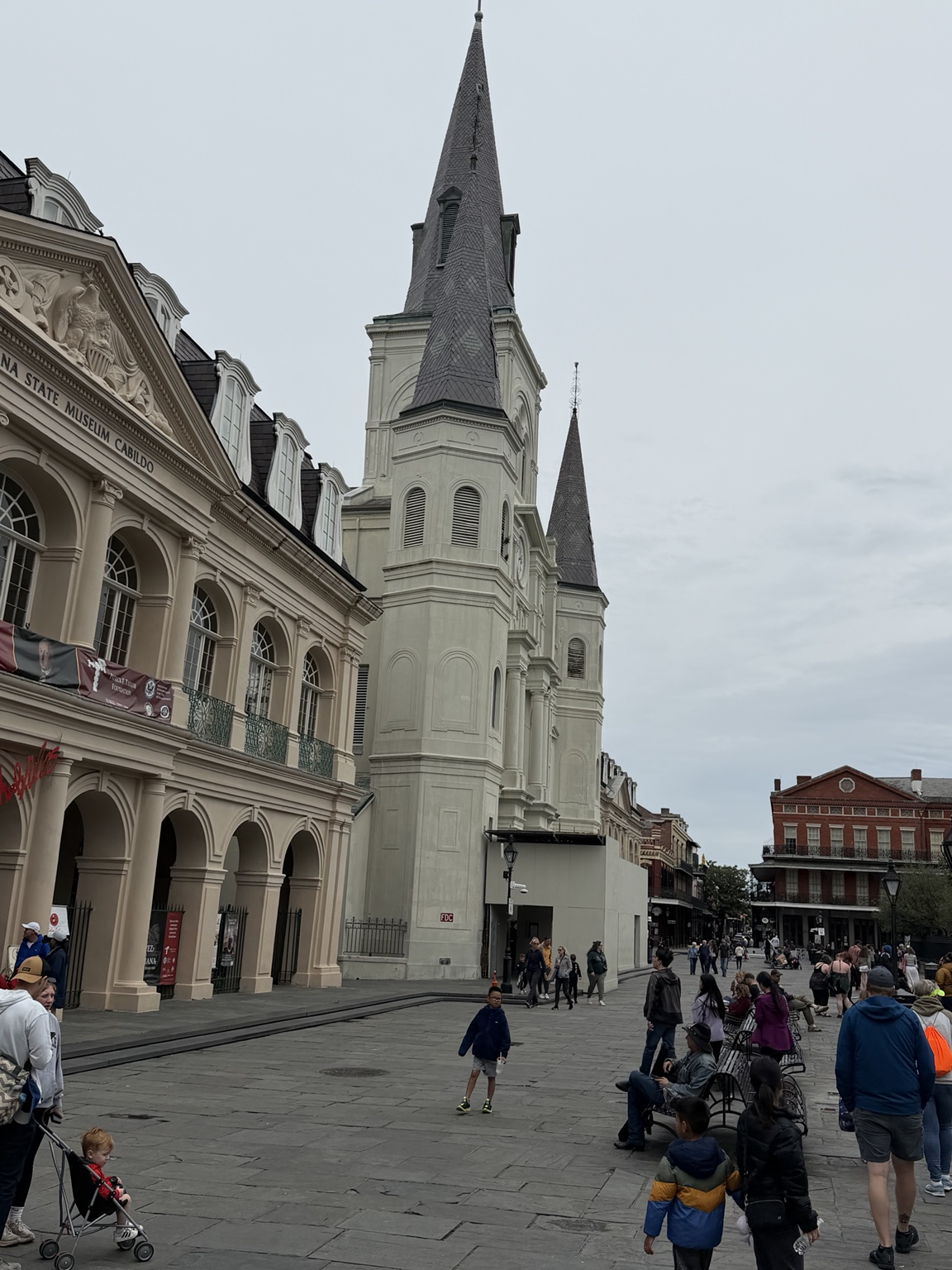
The cathedral facing Jackson Square is one of the defining landmarks of New Orleans. A church has occupied this site since the French colonial period. Fire, rebuilding and expansion changed the structure over time; the cathedral seen today largely reflects nineteenth-century work rather than an untouched colonial building.
The exterior places religious architecture within the civic heart of the old city. The cathedral’s history connects French origins, Spanish colonial administration and the later growth of an American port. Its survival as both a place of worship and an urban landmark makes the streetscape a useful starting point for understanding the city’s layered cultural identity.
Historical sources: Read the source
Read the historical background
The cathedral interior: architecture arranged for worship
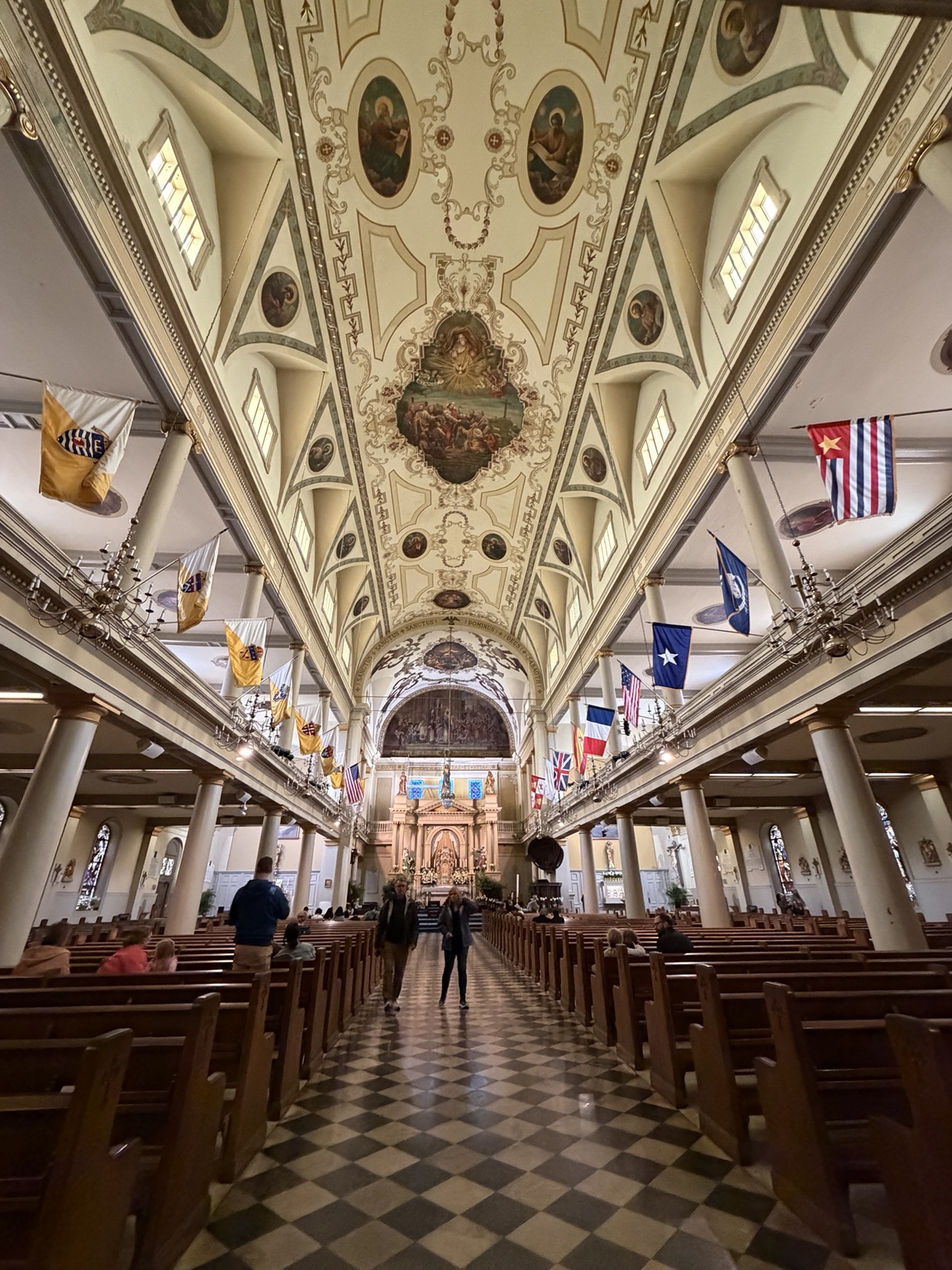
The central aisle draws the eye toward the sanctuary and altar, revealing how the interior organizes a congregation’s attention. Rows of seating, the elevated sacred space and the decorated surfaces work together to make the building a place for shared ritual as well as an architectural landmark.
This view belongs to a cathedral repeatedly rebuilt and enlarged, including major work around 1850 and the blessing of the expanded building in 1851. The interior therefore represents accumulated decisions about worship, art and preservation. A present-day photograph records that continuing use; it cannot by itself date every furnishing or decorative element.
Historical sources: Read the source
Read the historical background
The painted ceiling: looking upward in a sacred space
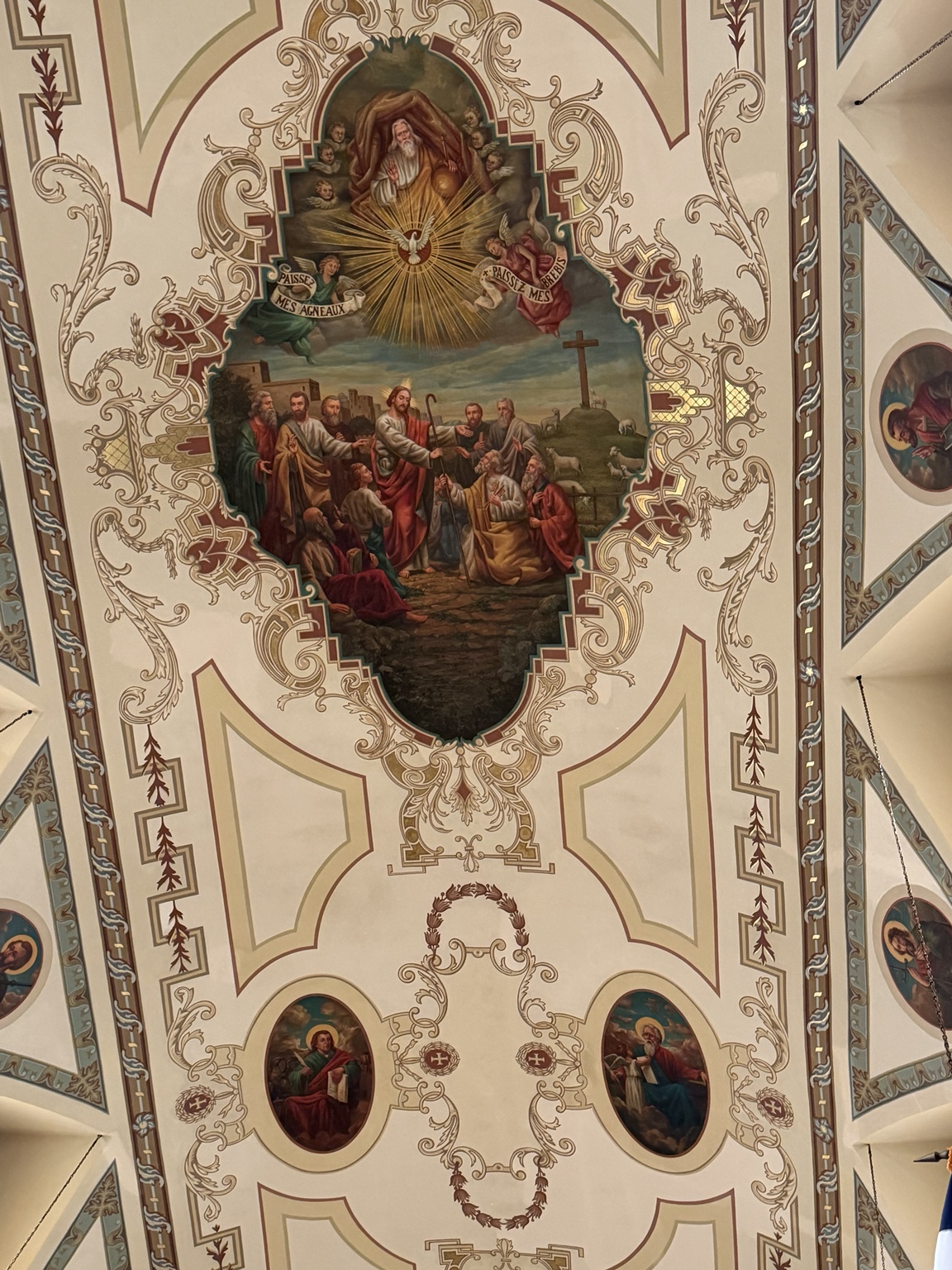
The ceiling detail shows how religious decoration extends the experience of the cathedral beyond the altar. Painted imagery and ornament invite visitors to look upward and connect the building’s physical space with its spiritual purpose. Such decoration also rewards the slower observation that a close photograph makes possible.
The cathedral’s documented history includes repeated rebuilding and restoration. For that reason, the age of the church as an institution should not be confused with the date of an individual painted surface. This photograph is best read as a record of the decorated interior encountered during the visit, without assigning an unverified artist, biblical scene or installation date.
Historical sources: Read the source
Read the historical background
A cathedral plaque as a historical source
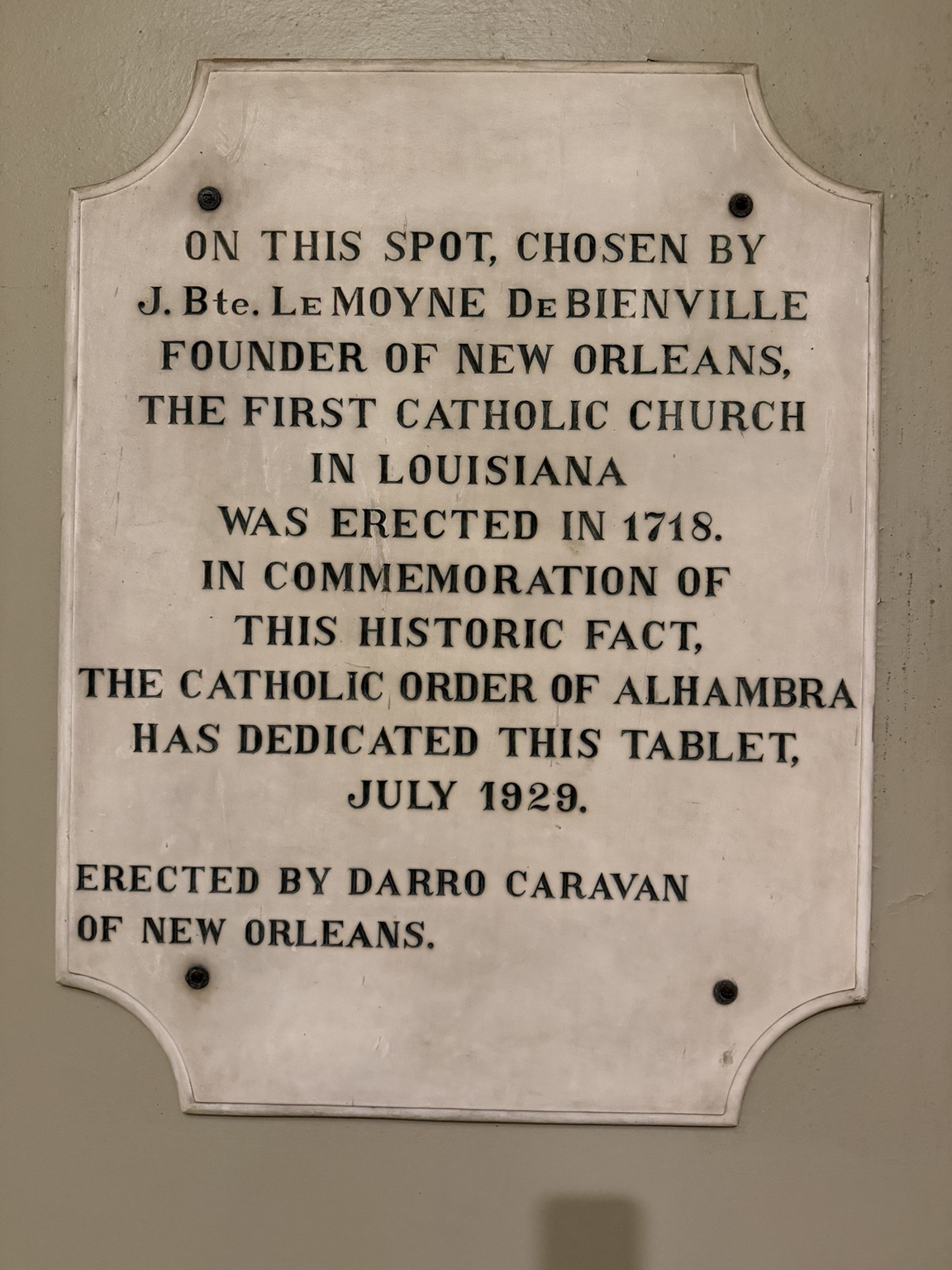
The photographed plaque provides an on-site account of the cathedral’s past. Markers like this help connect a visitor’s immediate surroundings to earlier buildings, major events and the people responsible for preserving a place. They also condense a much longer history into a small amount of space.
Compare the plaque with the cathedral’s institutional history, which describes rebuilding and expansion over several periods. This avoids assuming that every visible part of the building dates from the first church on the site. The plaque itself is a later act of interpretation: it tells us how the cathedral’s history was selected and presented for visitors.
Historical sources: Read the source