The 1760 plan
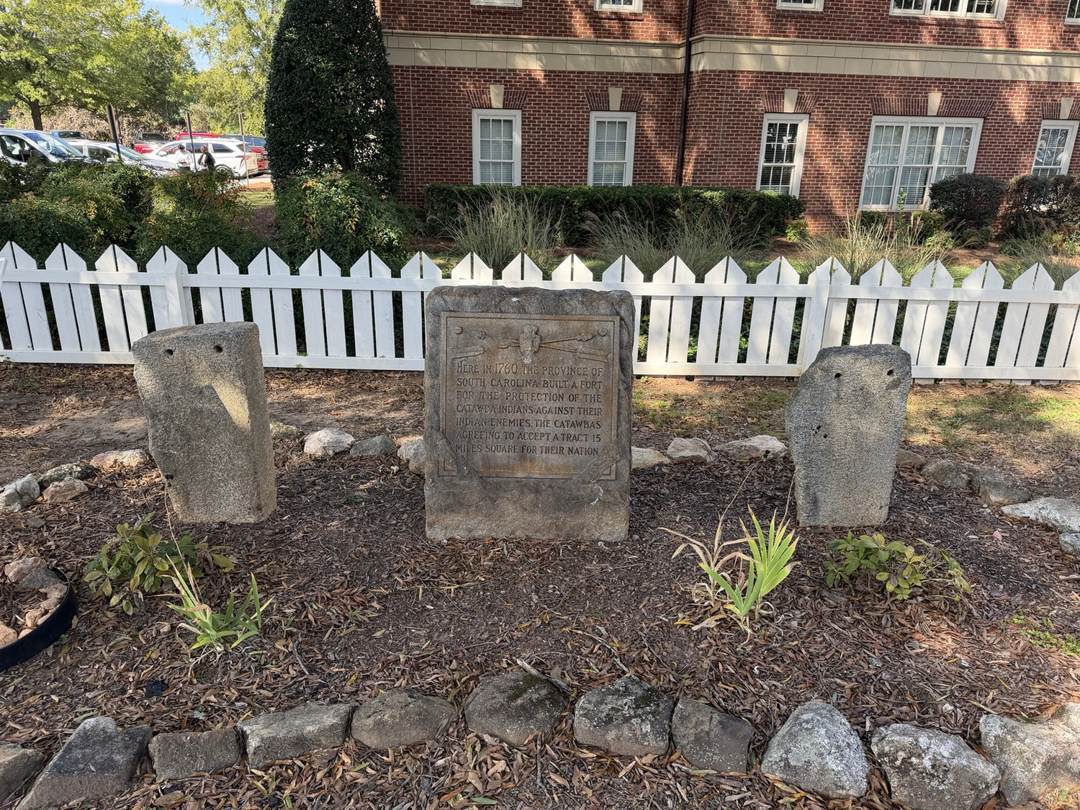
The museum’s interpretation says that construction was begun in 1760 by the colonial government at the request of the Catawba people. The project was intended to provide a place of refuge during conflicts with other Indigenous communities.
The museum also says that the fort was never completed, citing political upheaval and a devastating smallpox epidemic as part of the explanation. Thus the local name recalls a proposed fort even though a finished defensive structure did not survive.
The stones are not fort walls
The museum displays two corner stones and a historical marker moved from Brickyard Road in May 2021. These stones had been installed to commemorate a site; they are not evidence that a standing stone fort was completed in 1760.
Photographing the entire grouping, then the marker text, lets visitors see the distinction for themselves. The location outside the museum is a preservation site, not necessarily the precise site of the proposed colonial construction.
A wider Catawba history
The Catawba Nation’s own account puts the story within a much longer timeline of settlement, trade, epidemics, land claims, and continuing tribal identity. That perspective is essential: the Nation’s history is not a footnote to the origins of a modern town.
Why careful wording matters
Historical markers can preserve important facts while also reflecting the language and assumptions of the era in which they were erected. Reading them alongside museum research and the Catawba Nation’s own history leads to a fuller account than treating every inscription as conclusive.
From the field
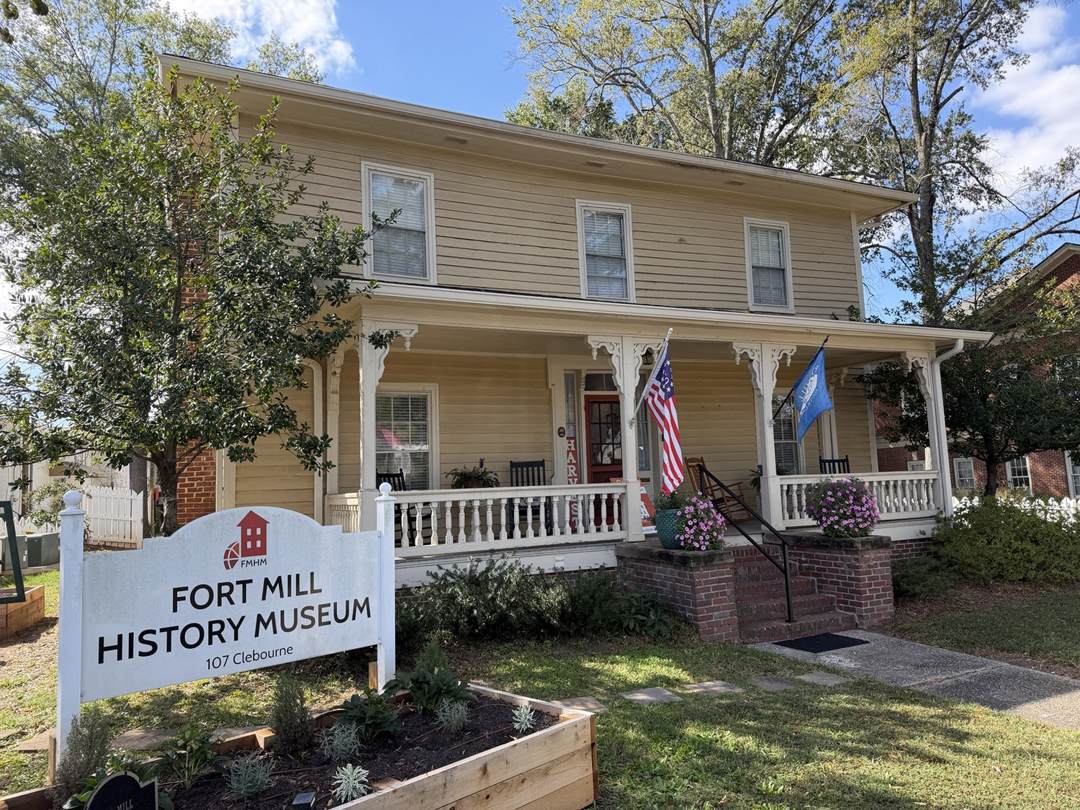
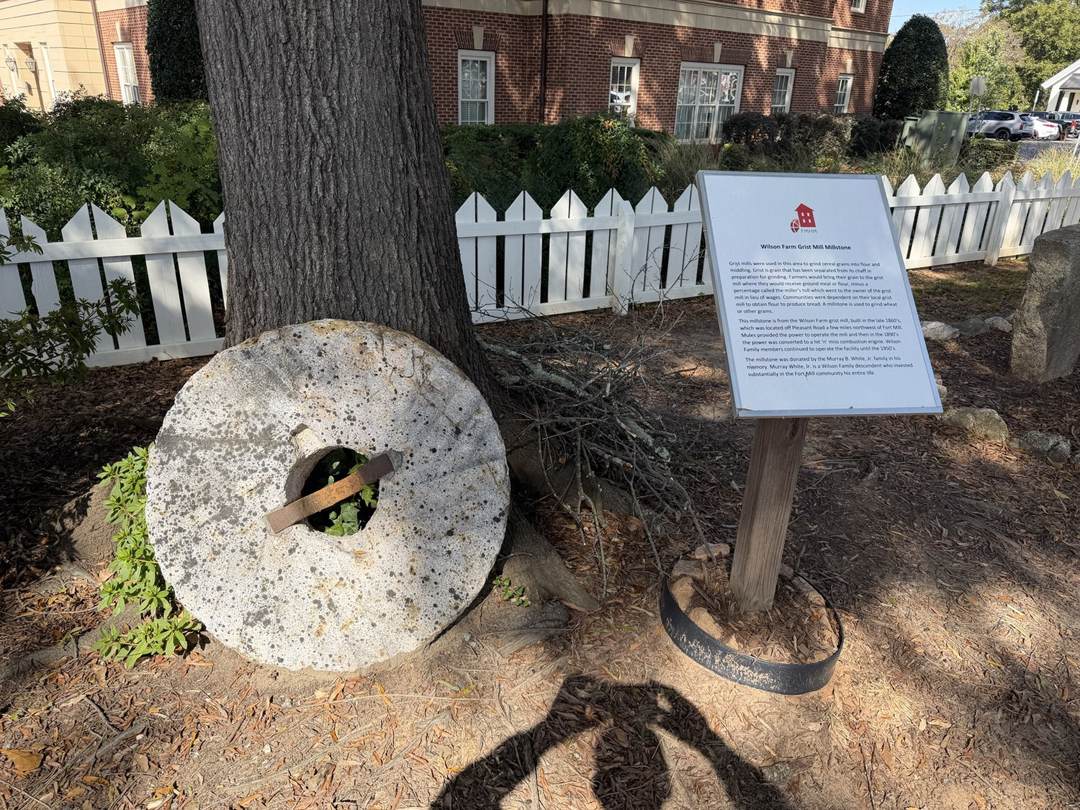
Photographs show the locations as visited; old buildings and historic markers should not be confused with reconstructions of the entire historical setting.
← Back to the stories