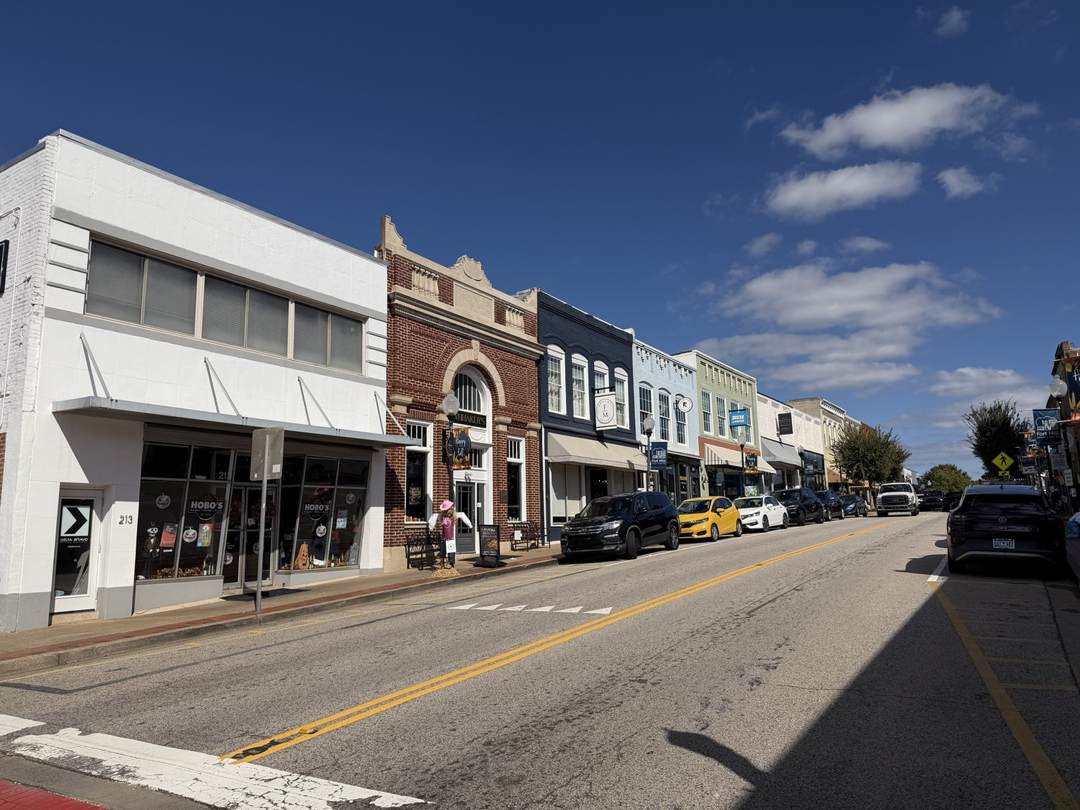
The street shaped by commerce
The Fort Mill History Museum explains that Main Street took shape after the railroad arrived in 1852. Several storefronts date to the nineteenth century, though the businesses inside them have changed over time.
Historic architecture can survive successive uses. Brick façades, upper-story windows, and the relationship between storefronts and streets remain visible even when the original merchants are long gone.
Mills and the textile era
A large millstone displayed at Millstone Park recalls the earlier grist mill that contributed to the town’s name. Later, Fort Mill’s economy was transformed by textile manufacturing: Fort Mill Manufacturing Company was established in 1887 and later developed into Springs Industries.
These two different kinds of mills represent different eras. The grist mill served agricultural needs; the textile mills supported an industrial town, bringing both employment and profound changes to the local economy.
Bandstand and memorials
Confederate Park was established in 1891, and its bandstand dates to 1900 according to an on-site marker. Its Confederate monuments were erected during the postwar commemorative era, not during the Civil War itself.
The park’s monuments are part of the story of public memory—what later generations chose to honor, how their interpretations reflected the era, and why those choices can be contested today. Their histories should be presented with context, not as neutral summaries of the war.
A historic place that continues to change
The train tracks, town clock, shops, parks, and public spaces appear in today’s photographs. They show a living downtown, where older buildings remain in use and historical sites are woven into everyday life.
From the field
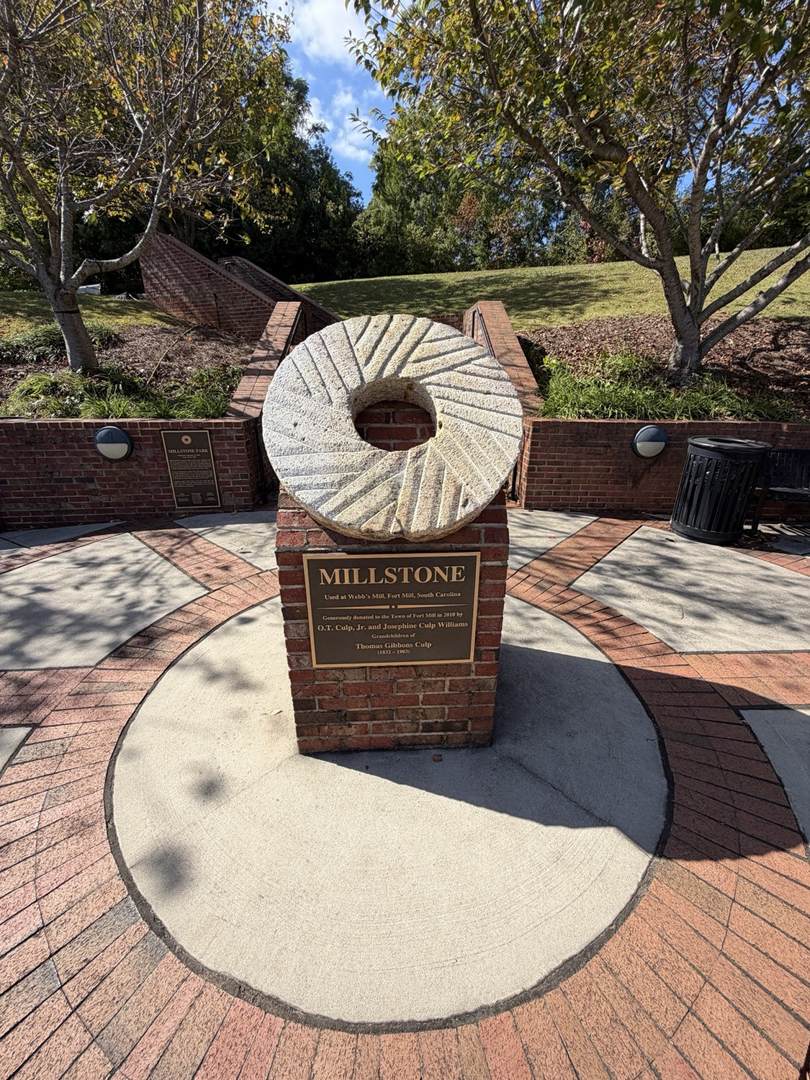
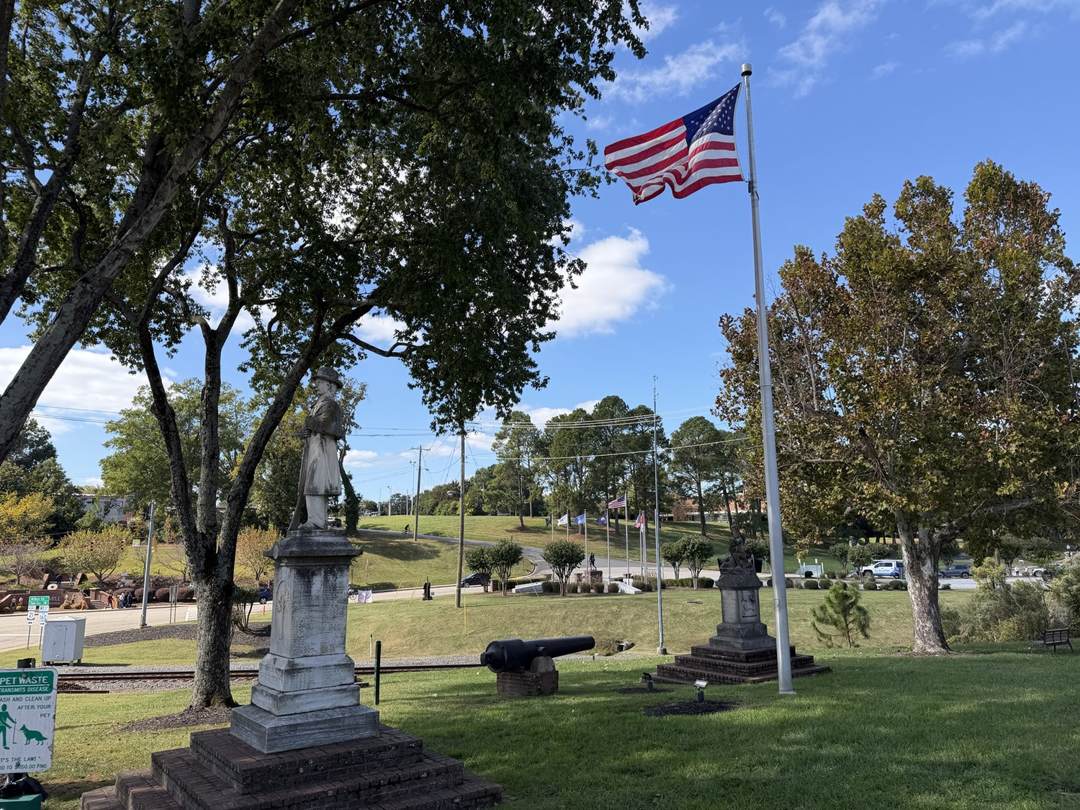
Photographs show the locations as visited; old buildings and historic markers should not be confused with reconstructions of the entire historical setting.
← Back to the stories