Side 1: the house and the Springs family
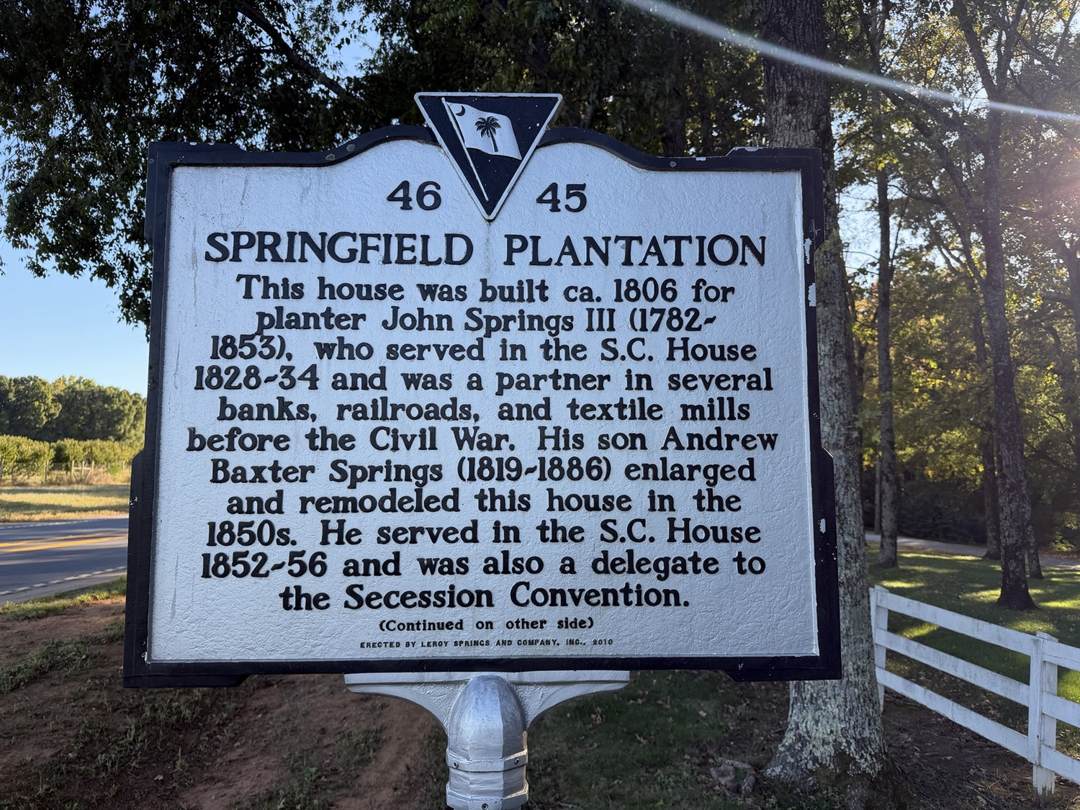
The Springfield Plantation marker dates the house to approximately 1806 and associates it with planter John Springs III. His son Andrew Baxter Springs expanded and remodeled it in the 1850s. The family’s connections reached into banking, railroads, and textile manufacturing.
The term “plantation” also requires context. Wealth and agriculture in antebellum South Carolina were deeply connected to enslaved labor. A description of the property should not lose sight of that wider history.
Side 2: Jefferson Davis’s visit on April 26, 1865
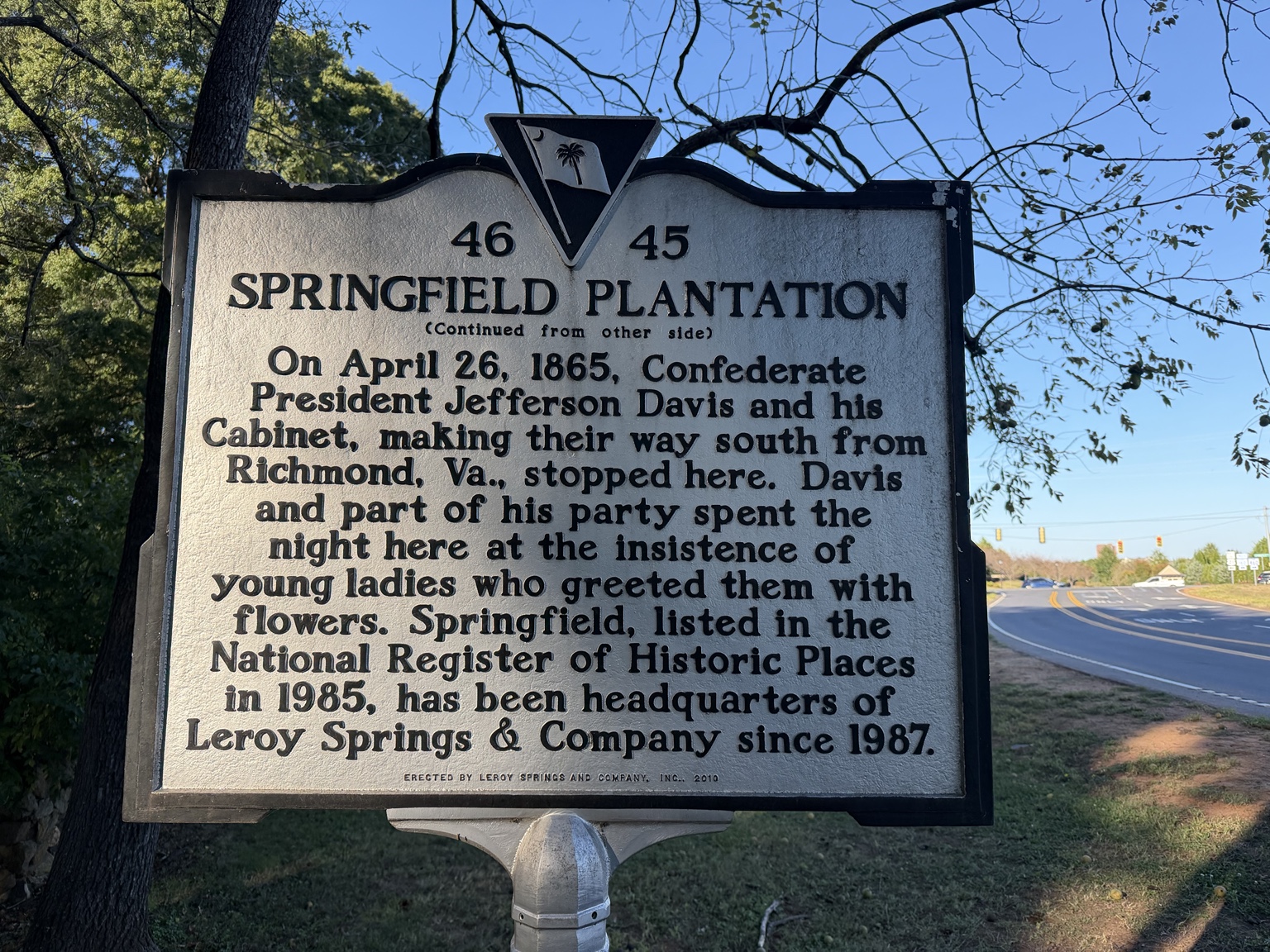
According to the reverse side of the marker, Confederate president Jefferson Davis and members of his Cabinet stopped at Springfield on April 26, 1865, as they fled south following the fall of Richmond. The marker says Davis and part of the party stayed overnight. It also records Springfield’s listing in the National Register of Historic Places in 1985 and its use as Leroy Springs & Company headquarters beginning in 1987.
These events took place near the end of the war, when the Confederate government had lost the ability to govern from its former capital. The journey is historically significant, but its details should be distinguished from romanticized later commemorations.
Finding the marker on Old Nation Road
The marker stands on Old Nation Road (U.S. Route 21 Business) in Fort Mill. One side describes the house and the Springs family; the reverse side tells the story of Jefferson Davis’s visit. The marker is the subject of these photographs, not the plantation house itself.
Why this roadside stop belongs in Field Notes
The two sides cover different parts of Springfield’s history. The house-history side introduces the Springs family and the property’s development; the reverse side describes the April 1865 visit and the property’s later use. Reading them together helps connect this roadside marker with the place and events it commemorates.